The Gemini app does not search every question. It decides.
That is the first thing that makes Gemini different from Google AI Mode. Gemini SEO is the work of getting your brand cited inside the Gemini app answers, and step one is understanding that the app answers from the model by default and only runs a Google Search when it judges the web would improve the reply. When it does search, it grounds on Google index and cites a small set of sources. Your job is to be in that set.
What is Gemini SEO?
Gemini SEO is optimizing your content to be cited inside the Gemini app, the assistant at gemini.google.com and across Android and Workspace. It is not the same target as Google AI Overviews or AI Mode, even though all three are Google. The app reached over 1 billion monthly active users in August 2026, which Google called its fastest-growing product ever. That is a citation surface you cannot ignore.
The catch is that being cited here is conditional. Gemini answers plenty of questions with no search and no sources at all. You can only win the ones where it decides to ground, so the game is being the obvious source when it does.
How does the Gemini app decide what to cite?
Gemini decides in two steps: first whether to search, then which results to cite. Google own grounding documentation describes it plainly: the model analyzes the prompt, determines whether a Google Search would improve the answer, and if so generates its own search queries and runs them before answering. When it grounds, it pulls from Google Search, so your Google ranking is what puts you in the running.
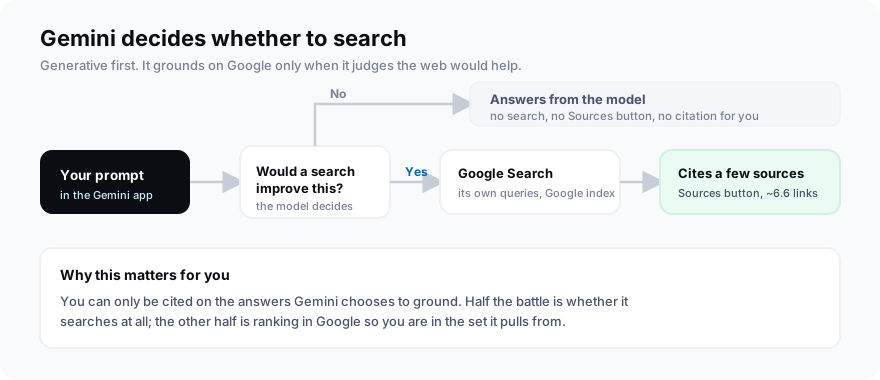
When Gemini does cite, it shows a Sources button below or inside the response, and it links direct quotes explicitly. If there is no Sources button, the answer was ungrounded. Google documents this behavior along with the separate Double-check feature, which re-runs Search against the finished text and flags each claim green or orange.
How do you get cited by Gemini?
To get cited by Gemini, win Google organic first, then be the clearest and most authoritative answer on the page. Rank for the questions your buyers ask, lead each section with a self-contained answer, and build a distinct entity through Wikipedia and Wikidata so Gemini can resolve who you are. Because it cites so few sources, the bar is higher than for the Search surfaces: you are competing for roughly six slots, not fifteen.
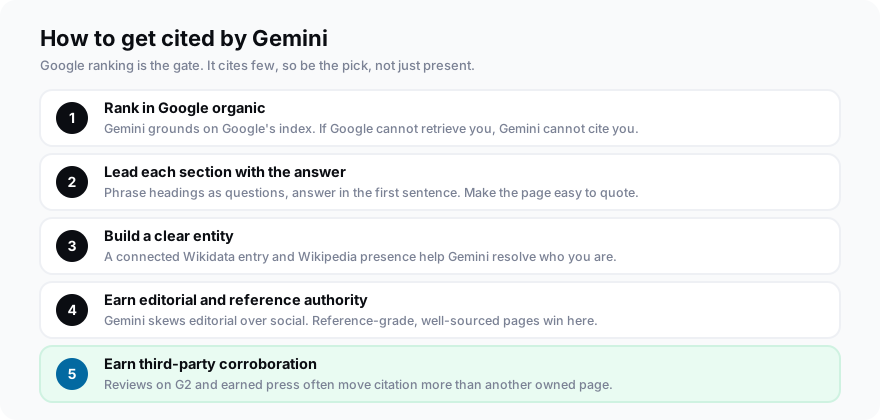
The sequence matters more than any single tactic.
Google organic comes first, full stop. If you do not rank for a query, Gemini has no path to you when it grounds, no matter how strong your brand is elsewhere. Everything else is a multiplier on top of a ranking you already hold.
Then write for extraction. Put the answer in the opening sentence of each section, phrase headings as real questions, and keep answers tight. A model deciding between six sources picks the one it can quote cleanly.
Entity clarity is the quieter lever. A connected Wikidata entry and a Wikipedia presence, where you genuinely meet notability, help Gemini resolve your brand as a real thing rather than a string of words. Third-party corroboration on sites like G2 and earned press does more than another owned page.
AI Mode cites fifteen sources and forgives a lot. Gemini cites six and forgives little. On this surface you are not trying to make the list, you are trying to be the pick.The higher bar
What does the Gemini app cite most?
Gemini cites fewer sources than the Search surfaces and leans toward editorial and reference sites. In a May 2026 Profound study of 2,346 prompts and billions of citations, the Gemini app attached about 6.6 sources per answer, versus 11.1 for AI Overviews and 15.2 for AI Mode. Its top domains were Reddit (1.85%), YouTube (0.69%), and Wikipedia (0.62%), a flatter, more reference-heavy mix than the social-heavy Search surfaces.
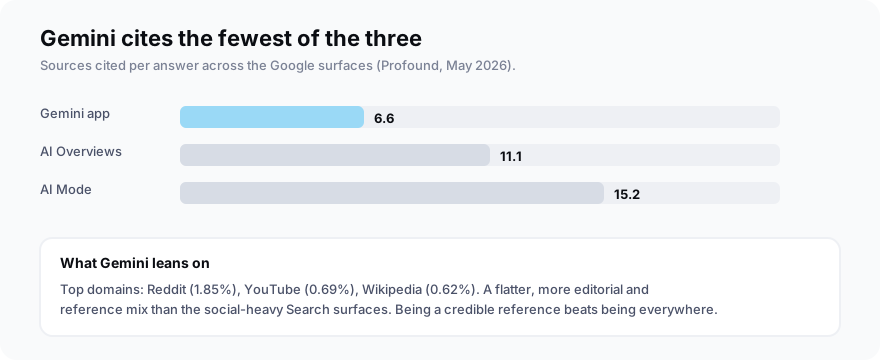
The practical read is that Gemini rewards being a credible, referenceable source more than being everywhere. A clear, well-sourced explainer that Google already ranks has a better shot here than a thin page propped up by volume.
Gemini app vs Google AI Mode vs AI Overviews
The three Google surfaces share an index but behave differently, so treat them as one foundation with three finishes. AI Overviews is grounded by design and sits on the results page. AI Mode grounds every query, fans it out into many searches, and cites the most. The Gemini app is generative-first, searches selectively, and cites the least. Same Google index, three different appetites for sources.
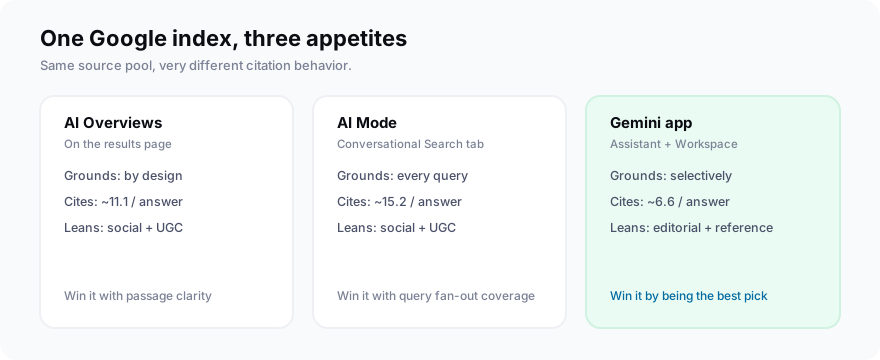
| AI Overviews | AI Mode | Gemini app | |
|---|---|---|---|
| Where | On the results page | Conversational Search tab | Assistant, app + Workspace |
| Grounds | By design | Every query + fan-out | Selectively |
| Sources per answer | ~11.1 | ~15.2 | ~6.6 |
| Leans toward | Social + UGC | Social + UGC | Editorial + reference |
| Win it by | Passage clarity | Fan-out coverage | Being the best pick |
Citation counts per answer are from Profound's May 2026 study; all three draw on the same Google index.
The upside of the shared index is that one effort pays off three times: the work you do to rank in Google feeds all three surfaces at once. For the two Search surfaces specifically, see our Google AI Mode SEO playbook and AI Overviews playbook. This guide is the app-specific layer on top.
How is Gemini SEO different from ChatGPT SEO?
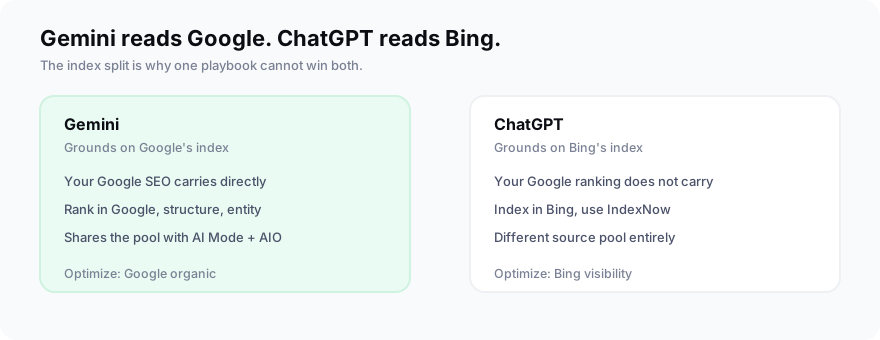
The real break is the index. Gemini grounds on Google, so your Google SEO carries directly. ChatGPT grounds on Bing, so it rewards a different index and a different set of sources. Optimize Google for Gemini and Bing for ChatGPT, and expect little overlap in who gets cited where, because the two engines read two different maps of the web.
How do you measure whether Gemini cites you?
You measure it by running your target prompts through Gemini and recording whether it grounded, and if so whether your domain was cited, then repeating on a schedule. Gemini is especially hard to eyeball because half the challenge is whether it searched at all, and that varies by prompt and phrasing. An API that queries Gemini and parses the citations turns that guesswork into a baseline you can track.
Watching it over time is the only way to tell the difference between an answer Gemini refused to ground and one where a competitor simply outranked you. Those need different fixes.
Frequently asked questions
Does Gemini cite sources?
How does Gemini choose which website to cite?
How do I get my brand cited in Google Gemini?
Why is my website not showing up in Gemini?
Do I need to allow a special crawler for Gemini?
Is optimizing for Gemini different from Google SEO or AI Overviews?
Rank in Google, then earn the pick
Do this next: make sure you rank in Google organic for your priority questions, rewrite those pages so each section opens with the answer, and tidy up your entity with a clean Wikidata entry. That covers Gemini, AI Mode, and AI Overviews in one pass.
Then check the surface most teams never look at. Pull a baseline of whether the Gemini app actually cites you with MentionsAPI, and watch it move as your Google rankings and entity signals firm up.