Google keeps saying optimizing for AI Mode is just SEO.
That is true. It is also the sentence that makes most teams do nothing.
Google AI Mode SEO means earning citations inside AI Mode, Google's conversational search surface. Google's official position is that it needs no special optimization, no llms.txt, and no AI-specific schema. What changes is the mechanics underneath: AI Mode breaks one question into many searches and cites roughly seven sources per answer, most of them from pages already ranking. So the work is real, it is just SEO aimed at a new surface.
What is Google AI Mode, and how is it different from AI Overviews?
Google AI Mode is a separate, conversational search experience inside Google Search, built for complex, multi-step questions with follow-ups. It is not the same thing as AI Overviews, the summary box that sits above the blue links on a normal results page. Both run on Gemini, but AI Overviews answers one query passively, while AI Mode is its own surface you talk to. Google passed 1 billion monthly active users on AI Mode by its Q2 2026 earnings.
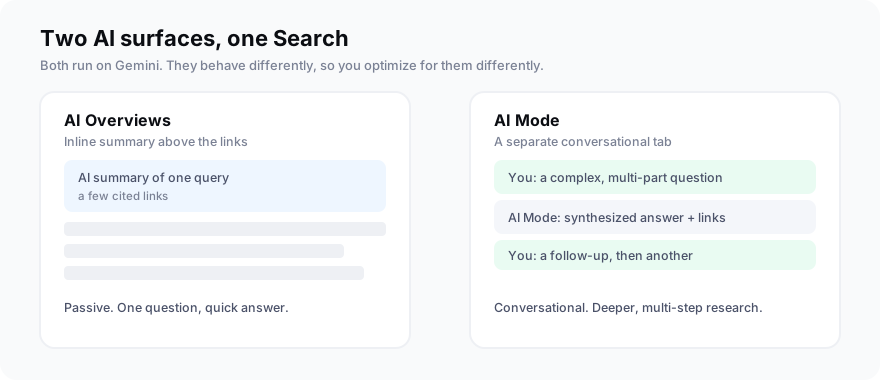
The line between them is blurring. Google said in 2026 it is merging the two into one Search experience, and as of its November 2025 update, Gemini 3 powers both. For now, treat them as two doors into the same house. The comparison against other engines is in our AI Mode vs ChatGPT and AI Mode vs Gemini breakdowns.
How big is Google AI Mode, and is it worth optimizing for?
Yes, and the numbers stopped being speculative a while ago. AI Mode went from a US-only Search Labs experiment in March 2025 to a full US rollout at Google I/O in May, then to more than 180 countries by August and 200-plus by October. By its Q2 2026 earnings, Google reported over 1 billion monthly active users on AI Mode, and AI Overviews had already crossed 2 billion. This is where a growing share of Google searches now resolve.
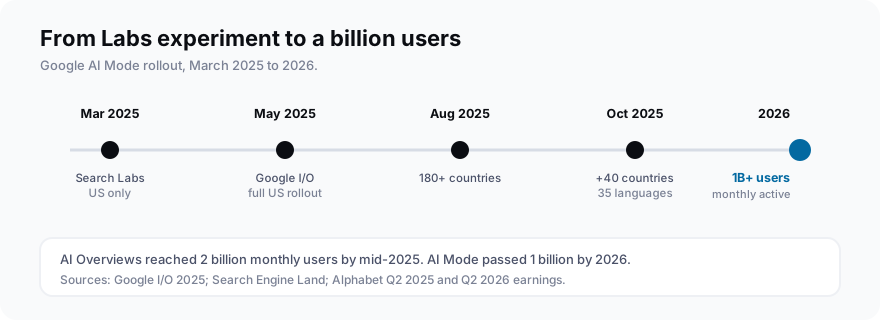
So the question is not whether to bother. It is whether your pages are set up to be one of the sources AI Mode reaches for when it fans a query out, which comes down to your rankings and how your content is written.
How does Google AI Mode choose what to cite?
AI Mode chooses sources with a technique Google calls query fan-out. It reads your question, splits it into subtopics, runs several searches at once, and stitches the results into one answer with links. Google's Robby Stein gave the example of a group-trip query fanning into restaurants, bars, and things to do with kids, "and it'll start Googling." More searches means more citation slots, and more competition for each.
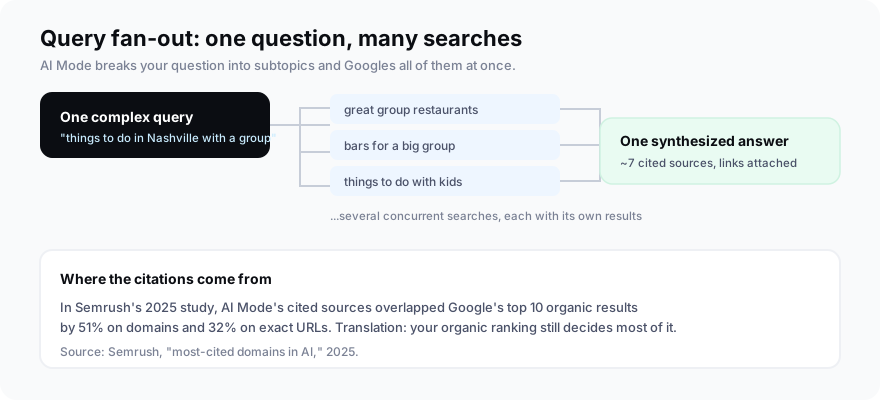
Here is the part that matters for your strategy. In a 2025 Semrush study, AI Mode's citation panel showed about seven unique domains per answer, and those citations overlapped Google's top 10 organic results by 51% on domains and 32% on exact URLs. Your rankings are not a side input. They are the main one.
Is AI Mode SEO actually different from regular SEO?
No, and Google says so directly: appearing in AI Mode needs no special optimization, and "it's still SEO." You do not need llms.txt, content chunking, or AI-specific rewriting. What shifts is the emphasis. Ranking earns the citation, so the foundation matters more than ever, and the reward moves from the click to the mention. For AI Overviews, Semrush found about 97% of citations came from pages already in the top 20.
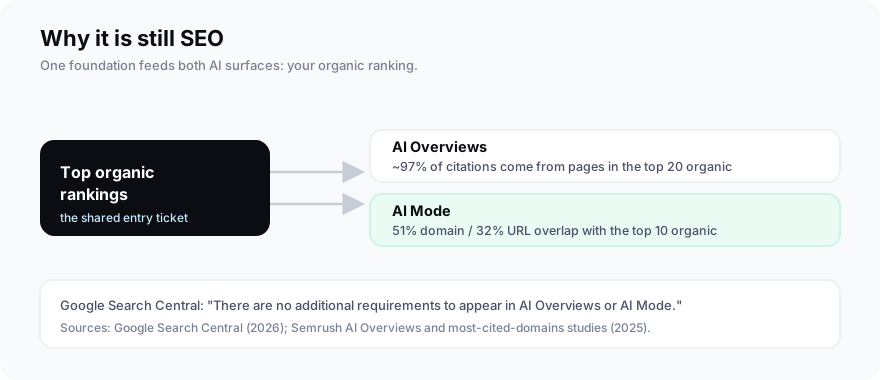
There are no additional requirements to appear in AI Overviews or AI Mode. Optimizing for generative AI in Search is still SEO.Google Search Central, 2026
So the tools you already have do most of the job. The change is that being on page one is no longer the finish line. It is the entry fee for being one of the seven sources AI Mode names. The wider version of this shift is in our AI search optimization guide.
How to optimize for Google AI Mode: the playbook
You optimize for AI Mode in five moves: rank in the top organic results, lead each section with a self-contained answer, prove first-hand expertise, stay crawlable, and track your citations per engine. The first two do most of the work. Query fan-out lifts passages, not whole pages, so a page that ranks well and answers cleanly in its first lines is the one AI Mode quotes.
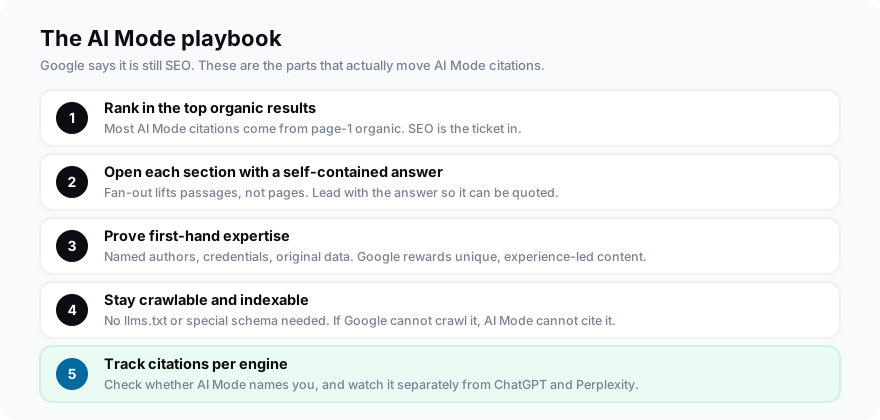
Two of these carry the most weight. Rankings, because the citation overlap with organic is so high. And self-contained passages, because a model reaching into your page for one subtopic needs to find the answer without reading the whole thing. Write the answer first, then explain.
The rest is table stakes Google names outright: unique, experience-led content over commodity pages, named authors with real credentials, clean crawlability, and the Search Console AI features report to see where you already appear. Skip the llms.txt rabbit hole. Google ignores it.
What is the difference between AI Mode, AI Overviews, and classic SEO?
They are three targets that share one foundation. Classic SEO wins a ranked link and a click. AI Overviews lifts a quick answer into a summary box above the links. AI Mode holds a conversation and cites a wider set of sources per answer. The content work overlaps heavily, but where you show up, and how you measure it, differs on each.
| Classic SEO | AI Overviews | AI Mode | |
|---|---|---|---|
| Surface | Blue links | Summary box on results | Conversational tab |
| Answers | A ranked page | One query, quick | Multi-step, fan-out |
| Win by | Rank + click | Rank + clear answer | Rank + liftable passages |
| Measure | Position, clicks | Cited in the box? | Named per prompt? |
How do you track whether AI Mode cites you?
You track it by running your buyer questions through AI Mode and recording whether you are named and cited, then repeating on a schedule. Because AI Mode cites differently from ChatGPT and Perplexity, a single blended visibility score hides which surface is working. Measuring AI Mode on its own tells you whether your Google rankings are actually converting into AI citations, which is the whole point.
Rankings you can already see in Search Console. Whether they turn into an AI Mode mention is the number most teams never check.
Frequently asked questions
How do I optimize my website for Google AI Mode?
How is Google AI Mode different from AI Overviews?
How does Google AI Mode work?
Do I need special schema or an llms.txt file for AI Mode?
How do I get cited in both Google AI Mode and AI Overviews?
How do I track whether AI Mode mentions my brand?
Rank first, then check the mention
Do this next: pick the ten questions your buyers actually ask, make sure you rank on page one for them, and rewrite each target page so the answer leads. That covers what AI Mode, AI Overviews, and classic search all reward at once.
Then check the part Search Console cannot show you. Pull a per-surface baseline with MentionsAPI and watch whether AI Mode starts naming you as your rankings climb.