There are two Microsoft Copilots, and they read completely different libraries.
Copilot SEO is the work of getting your brand cited inside Microsoft Copilot answers, and the first thing to know is that Copilot is really two products. The consumer Copilot in Windows, Edge, and Bing grounds its answers in Bing web index and cites a source on almost every reply. Microsoft 365 Copilot, the enterprise one, grounds in your organization's own files through Microsoft Graph. Same brand, two libraries, two very different ways to get cited.
What is Copilot SEO?
Copilot SEO is optimizing your content to be cited as a source inside Microsoft Copilot. For the consumer product, that means being visible in Bing, because Copilot builds answers from Bing results and attaches citations. It is a large surface: Microsoft reported that its Copilot family reached about 150 million monthly users by early 2026, spanning consumers and enterprises.
The important quirk is that Copilot cites almost every time. Where ChatGPT decides whether to search, Copilot web answers are grounded by default, so a Bing citation is not an occasional bonus. It is the normal path to being seen.
How does Microsoft Copilot decide what to cite?
Copilot decides by grounding in Bing. It reformulates your question into several internal grounding queries, runs them against Bing index, fetches passages, and composes an answer with source cards attached. Microsoft now surfaces those exact grounding queries and citations inside Bing Webmaster Tools, which is direct confirmation that Bing is the retrieval layer.
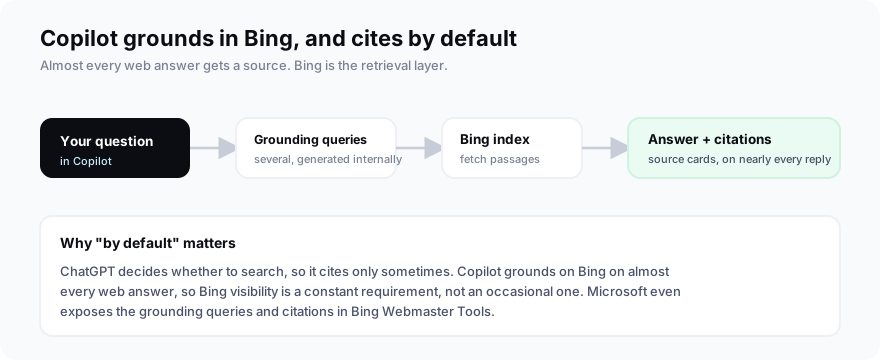
Because the source pool is Bing, your Bing ranking is what decides eligibility. This is the same index ChatGPT uses, so the mechanics rhyme with our ChatGPT SEO guide. The difference is consistency: Copilot grounds on Bing far more often than ChatGPT does, so being in Bing matters on nearly every answer, not just the ones where the model chose to search.
How do you get cited by Copilot?
To get cited by Copilot, get into Bing first, make your answer easy to lift, then watch what Microsoft tells you. Index and rank in Bing with Bing Webmaster Tools and IndexNow, open each section with a tight, quotable answer, and use the Bing Webmaster Tools AI Performance report to see the exact queries and pages Copilot cited from your site. That last part is rare: it is a first-party view of your AI citations.
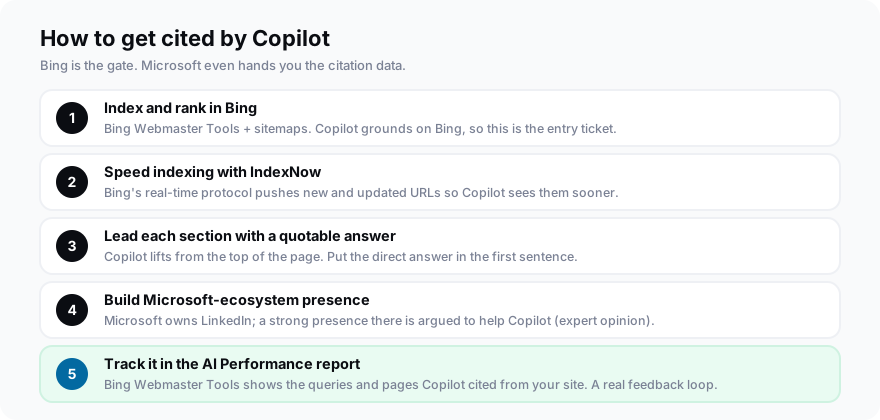
Two moves are Copilot-specific and worth calling out.
Use the AI Performance report. Launched in early 2026, it shows your grounding queries, citation counts, and which pages Copilot pulled from. No other major engine hands you that data directly, so it turns Copilot optimization from guesswork into a feedback loop.
Lean on the Microsoft ecosystem. Microsoft owns LinkedIn, and practitioners argue a strong LinkedIn presence carries extra weight for Copilot citations. Treat that as informed opinion rather than confirmed policy, but the logic tracks: Copilot lives inside Microsoft surfaces and trusts Microsoft-adjacent signals.
Copilot is the one AI engine that shows you its receipts. Microsoft literally reports which pages it cited from your site, so you can optimize against real data instead of guesses.The unusual advantage
Consumer Copilot vs Microsoft 365 Copilot
The two Copilots read different libraries, so they need different work. Consumer Copilot grounds in Bing web index, which you influence with ordinary Bing SEO. Microsoft 365 Copilot grounds in your company's own data through Microsoft Graph, scoped to each user's permissions, which you influence only through internal content quality. Public SEO does nothing for the enterprise one.
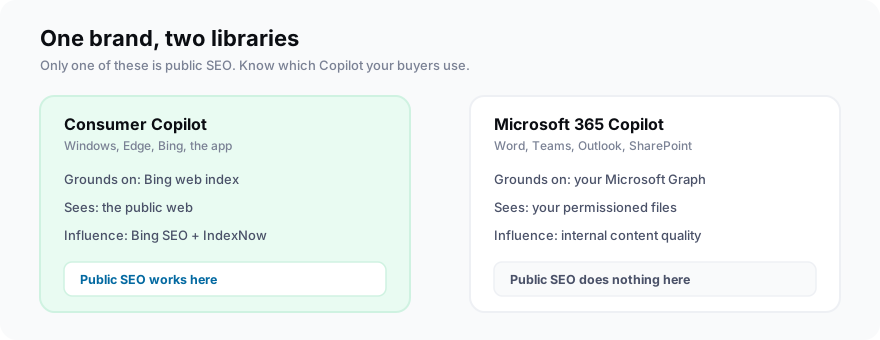
| Consumer Copilot | Microsoft 365 Copilot | |
|---|---|---|
| Where | Windows, Edge, Bing, the app | Word, Teams, Outlook, SharePoint |
| Grounds on | Bing web index | Your Microsoft Graph data |
| Sees | The public web | Your permissioned internal files |
| Influence with | Bing SEO + IndexNow | Internal content quality |
| Public SEO helps? | Yes | No |
About 70% of the Fortune 500 were using Microsoft 365 Copilot as of late 2024, per Microsoft, so for many B2B brands the enterprise half is where buyers actually meet Copilot. If you sell into large companies, your internal enablement docs may matter as much as your blog.
That last number cuts both ways. Bing is small next to Google, which is why most brands ignore it, and also why the Copilot citation slot behind it is far less contested than the Google one.
How is Copilot SEO different from ChatGPT SEO?
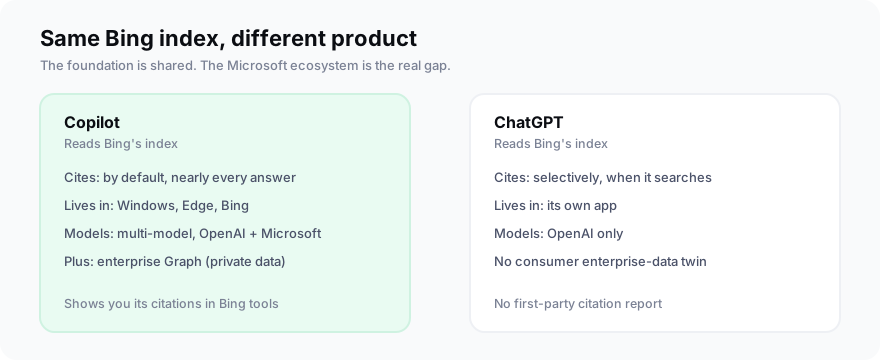
Both read Bing, so the foundation is shared, but three things set Copilot apart. It cites on nearly every answer rather than selectively. It is built into Windows, Edge, and Bing, so Microsoft distribution decides who sees your citation. And it has an enterprise half grounded in private Microsoft Graph data that has no ChatGPT-consumer equivalent. Same index, different product.
How do you measure whether Copilot cites you?
You have two ways, and you should use both. Microsoft's own Bing Webmaster Tools AI Performance report shows the queries and pages Copilot cited from your site, which is the ground truth for your own domain. To see the fuller picture, including prompts where a competitor got cited instead, run your target questions through Copilot and record who was named, then track it over time.
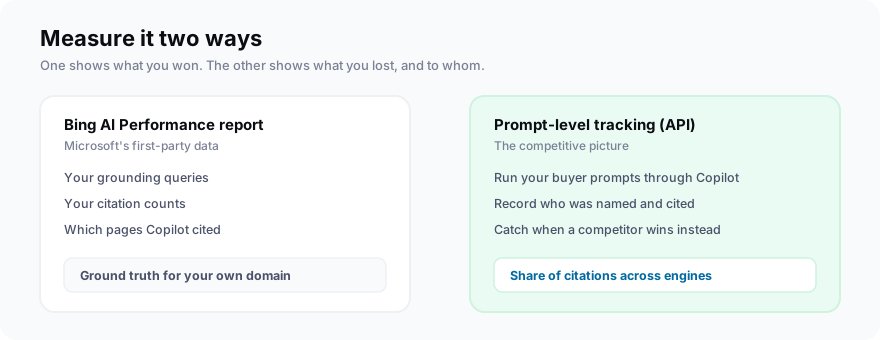
The first tells you what you won. The second tells you what you lost and to whom, which is usually the more useful half.
Frequently asked questions
Does Microsoft Copilot cite sources?
Does Copilot use Bing or Google to find sources?
How do I get my brand cited in Microsoft Copilot?
If I rank in Google but not Bing, am I invisible to Copilot?
How do I get cited in Microsoft 365 enterprise Copilot?
How is optimizing for Copilot different from ChatGPT?
Win Bing, then read your receipts
Do this next: verify your site in Bing Webmaster Tools, turn on IndexNow, rewrite your top pages so each section opens with the answer, and open the AI Performance report to see where Copilot already cites you. If you sell to enterprises, add a second track for your internal Microsoft 365 content.
Then measure the whole board. Pull a baseline of whether Copilot and the other engines cite you with MentionsAPI, and watch your share move as your Bing visibility firms up.